
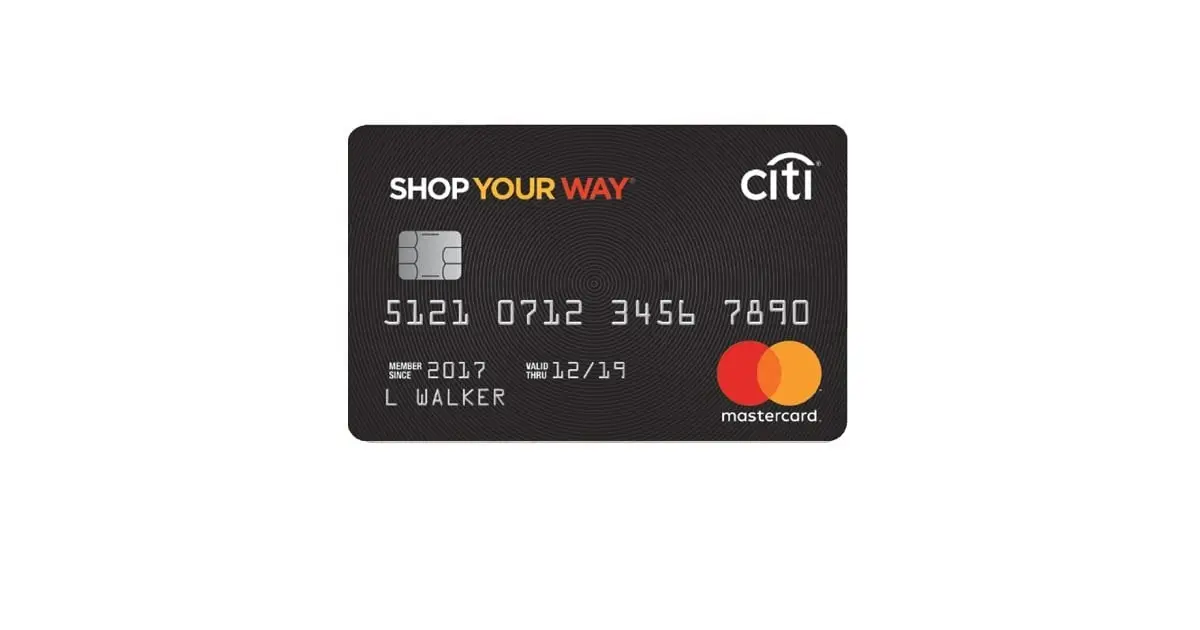
Introduction — Shop Your Way Mastercard discontinued
Credit card portfolios evolve, but smart investors and consumers use change to their advantage. With the Shop Your Way Mastercard discontinued and expected to be rebranded, the question isn’t “What did I lose?”—it’s “How do I get ahead?” Here’s the playbook I’m giving clients right now, backed by data, tools, and an ROI-first mindset.
Credit card changes 2025: What the Mastercard transition means for your wallet and your plan
The Shop Your Way Mastercard has been a niche-but-useful rewards card for loyalists of the Shop Your Way ecosystem (originally rooted in the Sears/Kmart network). As first reported in credit card news coverage by NerdWallet, the Shop Your Way Mastercard is being discontinued and is expected to be rebranded, with a Citi-issued Mastercard likely replacing it. Timelines and details can shift as issuers finalize the transition, so always verify with official communications from Citi.
What this means practically:
- Cardholders will not be left stranded. Typically, when a co-branded card sunsets, the issuing bank migrates accounts to a new product (in this case, a Citi-issued Mastercard). This protects your open credit line, limits score disruption, and keeps your credit history intact.
- Expect rewards card changes. Legacy category bonuses and redemption options tied to Shop Your Way may be replaced by a new Citi rewards framework. Issuers use these moments to simplify portfolios and align rewards economics with their broader strategy.
- Your optimization opportunity is now. This is when informed users re-evaluate their card stack, consolidate limits, and pivot to higher-ROI cash-back or points ecosystems.
Business-case perspective (advisor’s lens):
- Cost of capital: A well-structured rewards strategy can reduce net household spending by 1%–3% annually. That’s meaningful free cash flow that can be directed to tax-advantaged accounts, HSA contributions, or automated investing.
- Risk-adjusted returns: Moving from fragmented rewards to a few high-yield, transferable ecosystems (e.g., Citi ThankYou, depending on final product details) can improve redemption value and reduce breakage.
- Credit profile stability: Preserving average age of accounts and total available credit supports higher credit scores—which lowers borrowing costs across your financial life.
Source note: For breaking updates and context on best Mastercard options, see NerdWallet’s coverage: Shop Your Way Mastercard to be discontinued, Best Mastercard, and Credit card rewards programs.
The Shop Your Way Mastercard rebranded: How a Citi-issued Mastercard could reshape your rewards stack
While final branding and benefits may evolve, the direction of travel is clear: a Mastercard transition led by Citi typically means you’ll land within the Citi product universe. Historically, Citi’s mainstream cards compete on:
- Flexible rewards currencies (e.g., ThankYou points on some Citi products)
- Competitive earn rates in everyday categories (groceries, dining, travel, gas)
- Transfer partners and redemption optionality on select cards
Why this matters:
- If you’ve been in a closed-loop-style ecosystem (like Shop Your Way), the rebranding could broaden your redemption choices, often improving long-term redemption value if you pair with other Citi cards strategically.
- Citi’s product line may allow “combo strategies”—stacking a flat-rate card with a category card to optimize earn rates and consolidate points into a single ecosystem.
Real-world examples:
- Student Personal Finance: A 19-year-old with limited spend can use a new Citi-issued Mastercard to build credit. Pair a no-annual-fee flat-rate card with a high-yield savings account and set autopay to avoid interest. Redeem cash-back or points for statement credits to keep budgets simpler.
- Mid-career household: Combine a category card (groceries/dining) plus a flat-rate 2% card for non-bonus spend. Direct monthly rewards to offset utilities or insurance premiums—delivering visible, recurring savings.
- Retiree optimization: Focus on cards with purchase protection, travel insurance features (if relevant), and easy cash redemption. Avoid complex points strategies unless you actively redeem for travel value. Keep utilization low and automate fraud alerts.
Action checklist during the Mastercard transition:
- Watch your inbox and mailbox for Citi’s official notice: product name, rewards structure, APR, fees, and effective dates.
- Log the new benefits into your rewards-tracking spreadsheet or app. Update category bonuses and redemption values.
- Confirm autopay transfers correctly. Transitions can disrupt autopay links if your account number changes.
- Re-map recurring bills. If your card number changes, update subscriptions (utilities, insurance, streaming).
- Reassess your rewards portfolio. Identify overlap and potential upgrades, or downgrade paths to keep annual fees low.
How I use AI and analytics to guide clients through rewards card changes
In our advisory workflow, technology is a force multiplier:
- Data ingestion: We import 12–24 months of transaction data and categorize spend by MCC (merchant category). This identifies your true top-spend categories, not just your guesses.
- Optimization engine: A rules-based model maps your category spend to current top-earning cards and estimates net annual value after annual fees. We run scenario analysis to reflect the new Citi-issued Mastercard’s benefits once confirmed.
- Risk controls: We integrate credit utilization targets and age-of-account constraints, proposing changes that maintain a high credit score while upgrading rewards.
- Tax-aware cash flow: For clients in higher brackets, we redirect incremental cash-back to pre-tax or Roth contributions (subject to eligibility), calculating after-tax compounding effects.
Workflow snapshot (advisor’s playbook):
- Intake: Collect card lineup, credit limits, APRs, annual fees, and utilization.
- Analysis: Use AI classification to segment spend; stress test for lifestyle changes (new baby, relocation, travel).
- Recommendation: 2–3 card “core stack,” with quantified ROI and credit score impact.
- Automation: Set autopay rules, real-time alerts, and quarterly reviews.
- Compliance and privacy: We use bank-grade encryption and never store credentials in plain text.
The investor’s angle: Turn a card rebrand into a long-term edge
For investors and financial professionals, card decisions are not just about perks—they’re part of a broader capital allocation strategy.
- Cash flow compounding: Redirect $50–$150/month in rewards into an S&P 500 index fund or a high-yield savings account. Over 20 years at 7%–8% returns, that’s $25,000–$50,000 of incremental wealth.
- Borrowing cost arbitrage: A high credit score reduces mortgage, auto, and margin borrowing rates—creating structural savings that outstrip card perks alone.
- Behavioral finance: Automating redemptions to investment accounts lowers the temptation to overspend rewards on low-ROI purchases.
Portfolio management tie-in:
- Integrate rewards cash flows as a line item in your household income statement.
- Treat sign-up bonuses (if you pursue new cards) as one-time inflows; do not rely on them for recurring expenses.
- Use a personal “investment policy statement” (IPS) to define when you will or won’t chase a new card—avoid churn that hurts your credit or distracts from long-term investing.
Step-by-step plan: From Shop Your Way to a more powerful Citi-issued Mastercard stack
- Inventory your current benefits:
- Earn rates by category (gas, groceries, dining, travel, online)
- Annual fees and statement credits
- Purchase protections, extended warranty, and travel benefits
- Wait for the official Citi rebrand details:
- Card name and network (Mastercard)
- New earn structure and redemption options
- Intro APRs or balance transfer offers (if any)
- Run a before-and-after comparison:
- Use a spreadsheet or rewards calculator. Project 12 months of spend under the old vs. new structure.
- Include your personal redemption value (do you redeem at 1 cent per point, or can you achieve higher value?).
- Decide on your role for the new card:
- Core card: If the earn structure fits your top categories, keep it front-of-wallet.
- Backup card: If marginal, keep for utilization and older credit age, but move spend elsewhere.
- Product change: If underwhelming, call Citi to explore a product change to a better fit (no new credit inquiry in most cases).
- Optimize the broader stack:
- Combine with a flat-rate 2% card for non-bonus spend.
- Add a no-annual-fee grocery or dining card if the new card lacks those bonuses.
- If you travel, consider a premium travel card only if you’ll use the credits and protections.
Rewards card changes: Risk management and credit score protection
Transitions can create friction. Manage risk with discipline:
- Payment continuity: Confirm autopay after the rebrand. Missed payments crush scores and trigger penalty APRs.
- Utilization control: As limits or account numbers change, keep utilization under 10% for score optimization.
- Fraud vigilance: New cards and numbers are prime time for fraud attempts. Enable push notifications and AI-driven fraud detection from your bank app.
- Hard inquiries: A rebrand typically does not trigger a hard pull—but applying for new products might. Stagger applications if you plan a mortgage or auto loan within 6–12 months.
Credit scoring tip:
- Average age of accounts is a key factor. Prefer product changes over closures.
- Request credit limit increases periodically if your income supports it to lower utilization.
Practical use cases by life stage
- Students (18–24):
- Keep it simple. Use one or two no-annual-fee cards.
- Set autopay-in-full. Credit is an asset; interest is a tax on impatience.
- Use campus budgeting apps; route rewards to emergency fund or Roth IRA if eligible.
- Working Professionals (25–55):
- Build a 2–3 card stack aligned with your top spend categories.
- Evaluate premium cards only if you’ll extract full value from travel credits and insurance.
- Redeem monthly and automate investing. Small increments compound.
- Retirees (55+):
- Value ease, protections, and low fees.
- Keep cash redemption simple; travel benefits are a bonus if you truly use them.
- Maintain account longevity for score stability; minimize complexity.
Technology-forward tools to make the transition painless
- Expense categorization apps (e.g., bank-native analytics): Identify category spend precisely.
- AI-based rewards optimizers: Simulate various card combinations, factoring in annual fees and your redemption style.
- Automation:
- Autopay in full
- Real-time fraud alerts
- Quarterly reminders to reassess category bonuses and redemption values
- Security stack:
- Virtual card numbers for online purchases
- Freeze/unfreeze features when you misplace a card
- Biometrics and password managers for logins
Advisor workflow insight:
- We maintain a living “Card Policy” document per client. It spells out: target utilization, acceptable annual fee budget, and the card’s job (primary vs. backup). During transitions like the Shop Your Way Mastercard rebranded phase, we update the policy, run a scenario refresh, and confirm execution steps with the client via a secure portal checklist.
Tax, compliance, and behavioral guardrails
- Tax angle:
- Consumer rewards are generally not taxable if earned via spend (not via bank deposit bonuses); verify with your CPA for edge cases.
- Direct cash-back to IRAs/HSA contributions to maximize tax-advantaged growth if eligible.
- Compliance mindset:
- Avoid manufactured spend or behavior that violates card terms.
- Keep documentation of statements and rewards activity, especially during transitions.
- Behavioral guardrails:
- Treat credit limits as guardrails, not goals.
- Do not let bonuses justify unplanned spending—only spend what aligns with your budget and IPS.
Benchmarking against the market: Best Mastercard options to compare
While you await the full details of the new Citi-issued Mastercard, benchmark it against today’s competitive landscape (see NerdWallet’s best Mastercard overview). Look for:
- Earn rate in your top two spend categories
- Redemption flexibility (cash vs. travel partners on select products)
- Total cost of ownership (annual fee minus credits, plus your time)
- Protections: extended warranty, purchase protection, travel insurance
If the rebranded card is strong but not best-in-class on your categories, complement it with:
- A no-fee 2% cash-back Mastercard for non-bonus spend
- A category specialist (groceries, gas, dining)
- A premium travel card only if you can use the credits and benefits
Building a resilient credit strategy for the next decade
The Shop Your Way Mastercard discontinuation is one chapter in a broader story: card portfolios will keep evolving in 2025 and beyond. Winners will be those who:
- Keep a simple, analytics-backed card stack
- Automate payments, alerts, and annual reviews
- Treat rewards as fuel for long-term wealth, not short-term consumption
- Leverage product changes over new applications when feasible
- Use AI tools to convert data into dollar-value decisions
FAQ Section
Q: What is happening to the Shop Your Way Mastercard?
A: As reported by NerdWallet, the Shop Your Way Mastercard is being discontinued and is expected to be rebranded. Cardholders should receive communications from Citi detailing the Mastercard transition, new product terms, and any rewards card changes. The practical impact: you’ll likely be migrated to a Citi-issued Mastercard, keeping your account open and your credit history intact.
Q: When will the Shop Your Way Mastercard be rebranded?
A: Timelines can shift as issuers finalize portfolios, but the change is part of broader credit card changes 2025. Watch for official notices from Citi specifying effective dates, interim rules, and when your new card and benefits kick in. Until then, continue normal use and payments.
Q: Who will issue the new Mastercard after the rebranding of Shop Your Way?
A: Based on current credit card news coverage, Citi is expected to issue the rebranded Mastercard. Always confirm with official Citi communications for the final product name, terms, and benefits.
Q: Are there any changes in rewards with the new Citi-issued Mastercard?
A: Expect changes. Co-branded earn rates and redemption tied to Shop Your Way may be replaced by a different Citi rewards structure. Some users may gain flexibility (broader redemption options), while others may see category or rate adjustments. Run a before/after analysis with your 12-month spend to quantify the impact and, if needed, complement with a second card to maximize ROI.
Conclusion
Credit card portfolios change. Capitalists adapt. With the Shop Your Way Mastercard discontinued and likely transitioning to a Citi-issued Mastercard, this is your moment to upgrade your rewards strategy, protect your credit profile, and redirect incremental savings into tax-advantaged, compounding assets. Use data, embrace automation, and be intentional: keep what compounds, cut what doesn’t. If you want a customized, technology-powered review of your card stack and cash-flow plan, bring your last 12 months of transactions—we’ll turn them into a clear, high-ROI roadmap for 2025 and beyond.
References
- NerdWallet: Shop Your Way Mastercard to be discontinued — https://www.nerdwallet.com/article/credit-cards/shop-your-way-mastercard-to-be-discontinued
- SBA Loan Bankruptcy: A Practical, Tech-Savvy Guide for Entrepreneurs and Advisors
- Transferring Colleges: A Finance-First, Data-Driven Playbook for Maximizing ROI
- Maximize Your Returns: Tax Deductions for Tuition and Student Loans
- Gerber Life Insurance Policy for College: Smart Uses, Risks, and ROI
- Apple iPhone 17 announcement: should I upgrade to iPhone 17?