
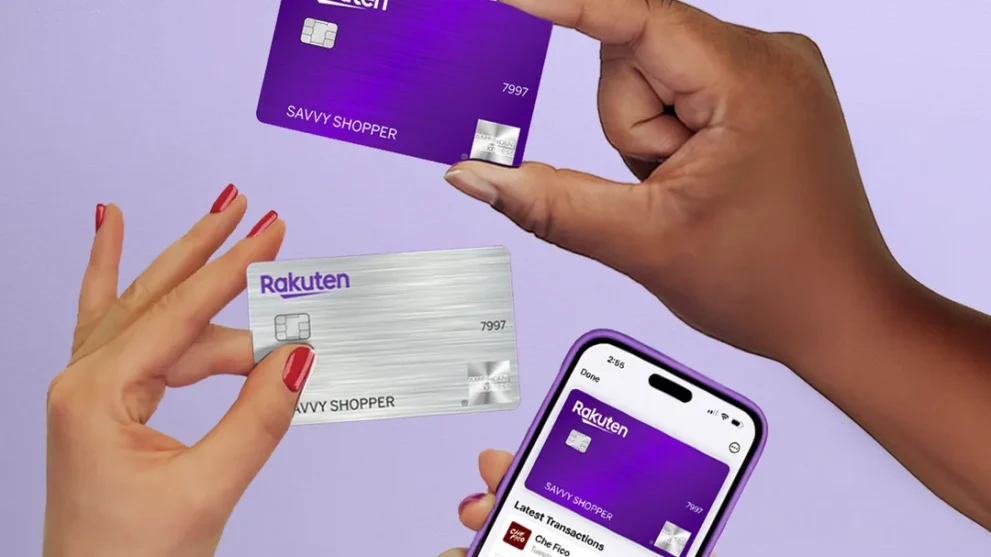
Rakuten Credit Card
If you’re serious about ROI on everyday spend, the Rakuten Credit Card can be a tactical lever—especially if you shop online and use the Rakuten portal. In this guide, I’ll show you how to use Rakuten cash back and Membership Rewards options like a pro, with frameworks that scale from students to retirees while staying grounded in facts and real numbers.
Rakuten American Express Card, Rakuten cash back, Rakuten card benefits, Rakuten membership rewards, Rakuten card review — What It Is and Why It Matters
Let’s cut through the noise. In the U.S., the “Rakuten Credit Card” is the Rakuten Cash Back Visa issued by Synchrony Bank. It’s designed to boost your earnings when you already use the Rakuten shopping portal (formerly Ebates). Here’s what’s unique:
- Core structure
- 3% cash back on qualifying purchases made through Rakuten (online portal, in-store offers activated in the app, and some partner categories like travel and gift cards).
- 1% cash back on purchases everywhere else Visa is accepted.
- No annual fee.
- Payout mechanics
- Rewards are paid via your Rakuten account on the typical Rakuten schedule (quarterly “Big Fat Check,” PayPal, or—optionally—American Express Membership Rewards points if you choose the MR payout option).
- If you select “American Express Membership Rewards” as your Rakuten payout, your Rakuten earnings convert at $1 cash back = 1 Membership Rewards point. This applies to portal earnings and your Rakuten card’s earnings. You need an eligible Amex MR-earning card to enable this payout option in your Rakuten account.
- Important clarification on “Rakuten American Express Card”
- In the U.S., the card itself is a Visa (Synchrony). The phrase “Rakuten American Express Card” you may see online often refers to the ability to receive Rakuten earnings as Amex Membership Rewards points—or to non-U.S. products. For U.S. users, think of this as a payout choice, not a distinct Amex-issued Rakuten credit card.
Why this matters for wealth builders:
- Stackability. You can stack the Rakuten portal rate (varies by merchant) plus the card’s 3% bonus on eligible Rakuten-channel purchases, driving a higher blended return than generic 2% cards when you route spending through Rakuten.
- Optional MR strategy. If you’re optimizing travel redemptions, converting Rakuten earnings (including the card’s 3%/1%) into Membership Rewards can yield greater than 1 cent per point when transferred to airline/hotel partners. That’s an arbitrage play on everyday spend.
- No annual fee. Low-friction entry for students building credit, professionals optimizing cash flow, and retirees lowering monthly burn.
Real-world example:
- A mid-career professional doing $6,000/year through the Rakuten portal (household goods, apparel, select travel) with average portal rates of 5% and using the Rakuten Credit Card:
- Portal: 5% via Rakuten = $300.
- Rakuten Card on those same purchases: +3% = $180.
- Total on portal purchases: $480.
- If MR payout is enabled and you value Membership Rewards at 1.5 cents/point (conservative for savvy travel redemptions), that’s $480 × 1 MR/$ × 1.5¢/MR = $720 of travel value.
Rakuten American Express Card, Rakuten cash back, Rakuten card benefits — The ROI Framework Pros Use
As advisors, we benchmark any rewards card by incremental yield relative to a simple baseline (like 2% everywhere). Use this three-step framework:
- Map your spend channels
- Baseline non-category spend: Groceries, gas, dining, general retail. Identify which spending can realistically be routed through Rakuten (online merchants, in-store offers via linked offers).
- Ask: What percent of my annual spend can I shift to a Rakuten merchant without increasing prices or reducing quality?
- Compute your incremental yield
- For spend routed through Rakuten: Incremental benefit over a 2% card is (Portal% + 3% Rakuten Card − 2% Baseline). Example: Portal 6% + Card 3% − Baseline 2% = +7% incremental.
- For non-Rakuten spend on the Rakuten card: 1% vs. 2% baseline = −1% incremental. You should likely use a top flat-rate card (2%+) for non-Rakuten spend.
- Decide your toolkit mix
- Keep the Rakuten card for portal and activated in-store offers; use a 2%+ card elsewhere.
- If you’re an Amex MR optimizer, set Rakuten payout to MR and route portal + Rakuten card spend to drive MR accruals at high velocity.
Advisor tip:
- We model monthly purchase data with AI categorization (e.g., Plaid + budgeting apps + our analytics layer) to simulate how much spend can be rerouted to Rakuten merchants without friction. From there, we run an expected value (EV) comparison versus competitor cards and a “do-nothing” baseline.
Risk and constraints:
- Foreign transaction fee: The Rakuten Visa typically charges a foreign transaction fee (commonly around 3%). Avoid using it abroad; pair with a no-FTF card for travel.
- Payout timing: Rakuten pays out quarterly. If cash flow timing is critical, keep this in mind.
- Portal dependency: Your best results depend on consistent use of the Rakuten portal or activated offers. This is a behavior system, not a set-and-forget 2% card.
Rakuten membership rewards — Turning Cash Back Into Travel Assets
If you select “Membership Rewards points” as your Rakuten payout, your Rakuten earnings (including the Rakuten Credit Card’s 3%/1%) convert to MR at $1 = 1 MR.
Why this is powerful:
- Travel leverage. MR can be worth >1 cent when used for airline/hotel partners (e.g., transfers to partners like Delta, Air Canada Aeroplan, ANA, or Hilton). Savvy redemptions often exceed 1.5 cents per point.
- Tax perspective. For individuals, cash back and points are typically treated as purchase rebates, not taxable income. For business spend, the rebate reduces your deductible expense, not your taxable income. Always confirm with your tax professional.
Illustration:
- Student example. You spend $2,000/year on back-to-school and electronics via Rakuten at 5% average portal rates. With the Rakuten card, you earn:
- 5% portal = $100
- +3% card = $60
- Total $160 = 160 MR if you choose MR payout; if you can redeem at 1.7¢/MR, that’s ~$272 of travel value—enough for a domestic short-haul flight in off-peak.
- Retiree example. You book $3,500 in travel via Rakuten Travel or a partnered OTA when rates are equal to booking direct, earning portal rates plus 3% from the card. Converting to MR and transferring to a partner can reduce cash outlay significantly—freeing up liquidity for portfolio withdrawals to cover healthcare and lifestyle costs.
Operational setup:
- You need an eligible American Express card that earns Membership Rewards to enable MR payout in your Rakuten account settings.
- Once enabled, future Rakuten earnings—including the Rakuten Credit Card’s earnings—will credit as MR points to your Amex MR account on Rakuten’s payout schedule.
Rakuten card review — Who Should Get It (and Who Should Pass)
Best for:
- Heavy online shoppers who already use the Rakuten portal and can reliably route purchases through it.
- Points enthusiasts who value MR at >1 cent and want to accelerate balances without annual fees.
- Side hustlers and small businesses operating as sole props who buy inventory or supplies from Rakuten partners and prefer quarterly payout predictability.
Think twice if:
- You rarely shop online via portals or won’t change behavior to click/activate offers.
- You want a one-card solution with high baseline everywhere rewards (a 2%–2.5% cash-back card may be simpler).
- You travel abroad often and need a no-foreign-transaction-fee card.
Comparative lens:
- Versus 2% cards (Citi Double Cash, Wells Fargo Active Cash): Rakuten wins on portal spend (Portal% + 3%), loses on non-portal (1% vs. 2%).
- Versus category cards (Amex Blue Cash Preferred, Chase Freedom/Discover seasonal categories): The battle is situational. If categories match your spend, they can outperform. But Rakuten portal stacking often wins on specific merchants and sales events.
- Versus premium travel cards (Chase Sapphire Preferred/Reserve, Amex Gold/Platinum): Premium cards provide travel protections, transfer partners, and big multipliers in dining/groceries/travel. Rakuten complements them by amplifying merchant-specific online purchases and by feeding MR if you choose that payout.
Technology Playbook: AI, Automation, and Analytics to Maximize Rakuten cash back
Modern advisors use tooling to turn rewards into a repeatable process:
- Browser automation
- Install the Rakuten browser extension. It auto-prompts activation at partner sites to prevent “missed clicks.”
- Use a card-optimizer extension or app that nudges which card to use at checkout (e.g., “Use Rakuten Card at Rakuten partners; use 2% card elsewhere”).
- Data feeds and alerts
- Set up weekly portal-rate alerts for target merchants using deal aggregators and email filters so you hit 10%+ spikes.
- Track returns and coupon interactions—some coupons void portal tracking. Train your workflow: always activate Rakuten last, then apply allowed codes.
- AI categorization and forecasting
- Link accounts to budgeting software and export transaction data. Use AI to bucket spend by merchant and identify what percentage is realistically routable to Rakuten.
- Run a quarterly forecast of expected portal earnings; adjust your card lineup accordingly.
- Automated risk assessment
- Monitor credit utilization. Set alerts to keep utilization under 10% to optimize FICO scoring.
- If you carry balances (I advise against it), model APR costs vs. cash back returns. If APR > rewards yield (it usually is), prioritize debt payoff over rewards.
Practical Strategies by Life Stage
Students (credit builders)
- Keep it simple: Rakuten Card for portal purchases + a student-friendly 2% card for everything else.
- Set autopay in full. Use calendar reminders synced to payout quarters to “harvest” Rakuten cash back or MR for planned travel.
- Credit hygiene: Start with a low limit, keep utilization low, never miss a payment. Rewards are irrelevant if you pay interest.
Working professionals (efficiency + optimization)
- Build a two-card stack: Rakuten Card for portal/in-store offers; 2%–2.5% card for general spend.
- Layer with category cards only if you’ll use them. Complexity is the enemy of execution.
- If you fly a few times per year, opt for MR payout. Transfer MR to partners for outsized redemptions on family travel.
Retirees (simplicity + cash-flow control)
- Favor cash back if you prefer predictable expenses. Use Rakuten card through the portal for online purchases; let quarterly payouts offset utilities or groceries.
- If you travel for leisure and enjoy planning, MR payout can stretch your budget—just keep it simple and only transfer points when you’re ready to book.
Advisor Workflow: How Pros Evaluate the Rakuten Card in a Household Plan
- Intake and spend mapping
- Collect 12 months of anonymized spend. Identify merchant overlap with Rakuten partners. Estimate “routable” share by category.
- EV modeling
- Scenario A: No Rakuten card; 2% baseline.
- Scenario B: Rakuten card + portal stacking + MR payout at conservative valuations (1.3–1.6¢).
- Scenario C: Rakuten card + portal + category cards.
- Quantify the delta in after-tax, after-fee terms.
- Behavior design
- Implement a “purchase checklist”: search merchant → activate Rakuten → confirm cookie tracking → pay with Rakuten card → archive receipt in app.
- Train for returns/exchanges to preserve tracking where possible; know exceptions.
- Review and iterate
- Quarterly reconciliation: Compare expected vs. actual payouts; adjust merchant list and alert rules.
- Annual re-underwriting: Confirm the card and portal still match the client’s lifestyle and merchant mix.
Risk, Reward, and Tax Perspectives
- Reward risk
- Portal terms can change; merchants may drop. Build flexibility into your plan.
- Returns and coupon codes can disrupt tracking. Always verify activation at checkout and review pending cash back.
- Credit risk
- Don’t chase rewards if it tempts overspending. Cash flow discipline beats points.
- Keep card count manageable—too many new accounts can ding your credit score short term.
- Tax view
- Personal rewards are generally not taxable; they reduce the effective purchase price.
- For business use, treat rewards as purchase rebates that reduce deductible expenses; keep records. Consult a CPA for edge cases.
How the Rakuten Credit Card Fits Within a Broader Investment Strategy
- Cash flow optimization
- Every extra 3–10% captured on discretionary purchases is risk-free return. Redirect those dollars to your IRA/401(k), HSA, or a taxable brokerage.
- Portfolio linkages
- Use quarterly Rakuten payouts to dollar-cost average into broad-market ETFs. Automate a transfer on payout dates.
- Behavioral finance
- Turn “shopping events” into “investing events”—every Rakuten payout triggers a micro-investment. Small edges, compounded.
- Technology compounding
- With AI categorization, portal alerts, and card routing, you can institutionalize what used to be “coupon clipping”—only now it scales and is mostly automated.
Competitive Snapshot: Where Rakuten Wins and Where It Doesn’t
- Wins
- Online shoppers who funnel purchases through the Rakuten portal or activated offers.
- MR optimizers who can beat 1.3¢ per point in redemptions, making the 3% effectively 3.9%+ in travel value.
- Households comfortable with simple systems: click Rakuten, pay with Rakuten card, reap quarterly rewards.
- Doesn’t win
- Non-portal spend is only 1%. You should pair with another card for groceries, dining, gas, and travel categories if you want higher everyday returns.
- Frequent international travelers should use a no-foreign-transaction-fee card abroad.
Implementation Checklist
- Open a Rakuten account (or log in) and install the browser extension.
- Apply for the Rakuten Cash Back Visa via Rakuten (Synchrony) if it fits your profile.
- Decide payout preference:
- Cash via Big Fat Check or PayPal.
- Membership Rewards points (requires an eligible Amex MR-earning card linked in Rakuten settings).
- Set autopay to “pay statement balance in full.”
- Build merchant watchlist and alert rules.
- Pair with:
- A 2%–2.5% flat-rate card for non-portal spend.
- Optional category/travel cards if you value the extra complexity.
FAQ Section
Q: What is the Rakuten Credit Card cash-back rate?
A: You earn 3% cash back on qualifying purchases made through Rakuten (portal or activated in-store offers) and 1% everywhere else. If you choose the Amex Membership Rewards payout in your Rakuten account, those earnings convert at $1 = 1 MR point.
Q: How do I apply for the Rakuten Credit Card?
A: Apply online through your Rakuten account; the card is issued by Synchrony Bank. Approval typically requires good to excellent credit. After approval, link the card to your Rakuten account so purchases track correctly through the portal or activated offers.
Q: Are there any fees associated with the Rakuten Credit Card?
A: There’s no annual fee. A foreign transaction fee generally applies, so use a no-FTF card for international purchases. Standard interest charges apply if you carry a balance; set autopay to avoid interest and preserve rewards ROI.
Q: How does the Rakuten Credit Card compare to other cashback cards?
A: It’s niche and powerful for portal shoppers. On Rakuten-routed purchases, Portal% + 3% can beat flat 2% cards and often rival category bonuses. For non-portal spend, the 1% rate lags behind general-purpose 2%–2.5% cards. Many households pair the Rakuten card with a strong flat-rate card.
Q: What are the benefits of the Rakuten American Express Card?
A: In the U.S., there isn’t a separate “Rakuten American Express” credit card; rather, Rakuten lets you choose Amex Membership Rewards as your payout. The benefit is that your Rakuten earnings (including the Rakuten Card’s 3%/1%) become MR points at a 1:1 rate, potentially increasing value via travel partners.
Conclusion
The Rakuten Credit Card is a capitalist’s tool: no annual fee, strong upside when you harness the Rakuten portal, and optional conversion to American Express Membership Rewards for travel leverage. Use technology—extensions, alerts, AI categorization—to systematize your clicks and card choices. Pair it with a high flat-rate card for everything else. Whether you’re an 18-year-old building credit, a professional optimizing household ROI, or a retiree stretching a fixed income, this setup turns everyday spending into a measurable, compounding financial advantage.
Take action: set up your Rakuten account, enable the browser extension, apply for the card if it fits your profile, choose your payout (cash or MR), and automate the rest. Small edges, repeated consistently, build real wealth.
References
- NerdWallet: https://www.nerdwallet.com/article/credit-cards/rakuten-credit-card
- Axos ONE Review: A Tech-Forward, Interest-Earning Banking Platform for Real-World Wealth
- College Acceptance Rates: What Falling Admit Numbers Mean for Your Money
- SEC proposal to end quarterly earnings: What it means for investors and markets
- Student Loan Forgiveness Lawsuit: What the AFT Case Means for IDR, PSLF, and Taxes
- PSLF Weighted Average Rule: The Smart Advisor’s Guide to Consolidation and Forgiveness