
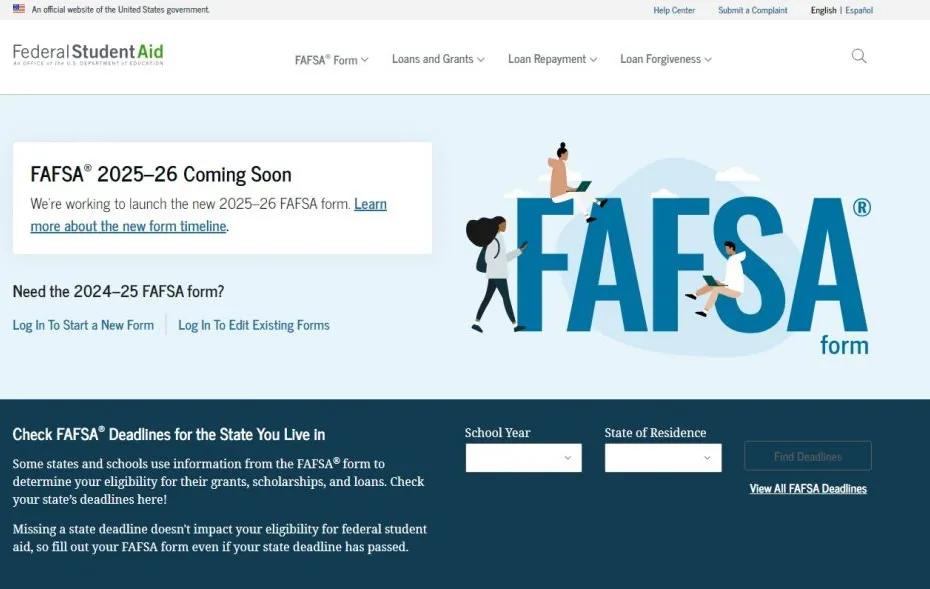
FAFSA deadlines for financial aid 2025-2026
Deadlines drive dollars. If you want the highest ROI on college funding, treat the FAFSA like a mission-critical filing—because it is. Below, I’ll walk you through FAFSA 2025-2026 dates, how federal and state timelines intersect, and the tech-enabled tactics my advisory team uses to help families capture every eligible dollar of aid.
FAFSA application deadline, financial aid deadlines, FAFSA 2025-2026, federal student aid: The dates that matter and how to plan around them — Section 1
Let’s establish the essentials first. The FAFSA (Free Application for Federal Student Aid) is the gateway to federal student aid, most state programs, many college scholarships and grants, and often better-priced student loans. It’s a cash-flow lever: the earlier and more accurately you file, the better your position for merit- and need-based money.
Key timelines for FAFSA 2025-2026
- Expected FAFSA open window: Traditionally October 1 of the prior year. After the one-time delay for 2024-25, Federal Student Aid has aimed to return to a normal cycle. Always verify the current cycle’s open date on studentaid.gov before you plan.
- Federal FAFSA deadline for the 2025-26 award year: June 30, 2026 (11:59 p.m. Central Time), with corrections due by mid-September 2026. Source: Federal Student Aid guidance historically sets June 30 of the award year as the final federal submission date.
- School priority deadlines: Many colleges use their own priority filing dates (often Jan–Mar). Miss these and you may lose access to campus-based funds with limited budgets (like FSEOG and some institutional grants).
- State FAFSA deadlines: States set their own dates, often “as soon as possible” after the FAFSA opens, or hard deadlines like March 2 (e.g., California Cal Grant). State funds can run out early—first-come, first-served is real.
Why filing early pays
- More aid, less stress: Many grants and campus-based funds are limited; early filers jump to the front.
- Faster award letters: Early data means you can compare offers, negotiate, and optimize financing.
- Cleaner data flow: The IRS Direct Data Exchange (DDX) automates income verification and reduces errors that slow awards.
My core rule: file as soon as the system opens for your target award year, then verify state and school priority deadlines and beat them by 2–4 weeks.
Financial planning impact (students, parents, grandparents, retirees)
- Students (18–24): Early FAFSA filing is like locking in an early bird price for your education funding. It clarifies your budget and reduces reliance on high-APR credit.
- Mid-career parents: FAFSA impacts cash-flow planning, 529 drawdown timing, and tax strategy. Aid accuracy helps right-size loan exposure relative to retirement contributions.
- Retirees and grandparents: Gifts, 529 plan ownership, and timing of distributions can influence aid; strategic structure can improve outcomes without sacrificing your legacy plan.
State FAFSA deadlines, college scholarships and grants, student loans application, FAFSA filing tips — Section 2
This is where tactics meet technology. The priority is to maximize non-dilutive aid (grants, scholarships) before considering loans.
Use this five-layer funding stack
- Federal grants and benefits (free money)
- Pell Grants: Based on the Student Aid Index (SAI) and family factors. Filing early is key; SAI replaces EFC under FAFSA Simplification.
- Federal Supplemental Educational Opportunity Grant (FSEOG): Campus-based, very limited, awarded early.
- Work-Study: Jobs subsidized by federal funds; early filing helps.
- State programs (often first-come, first-served)
- Many states have hard or priority deadlines and some run out of funds quickly.
- Examples (always verify annually):
- California: Cal Grant priority deadline historically March 2; additional September 2 for some community college applicants.
- Texas: Priority often Jan 15 for public colleges (program-dependent).
- New York (TAP): Deadlines vary; FAFSA + state form required.
- Illinois: As soon as possible—funds frequently exhaust early.
- Washington: Often ASAP; uses the WASFA for some non-citizens.
- Action: Check your state’s latest rules on the authoritative trackers and your state agency website, then file ASAP.
- Institutional grants and scholarships (targeted and negotiable)
- Colleges often set their own FAFSA priority windows that drive aid packaging.
- Merit stacking: Strong academic/leadership profiles can stack institutional merit on top of need-based grants.
- Private scholarships (independent capital)
- Use scholarship search engines and AI filters to match by major, region, background, and activities.
- Build a monthly scholarship pipeline; treat it like a part-time job with a high hourly ROI.
- Student loans application (debt last, optimized)
- Federal Direct Subsidized/Unsubsidized loans first: clearer protections, standardized terms, and income-driven repayment options.
- Parent PLUS: Consider credit impact, rate spread vs. private options, and long-term cash flow.
- Private loans: Only after you’ve exhausted federal options. Shop via rate marketplaces; look at cosigner policies, interest rate caps, and prepayment terms.
FAFSA filing tips that actually move the needle
- Create your FSA IDs early: Each contributor (student, parent, spouse as applicable) needs an FSA ID. Do this 1–2 weeks before filing to avoid bottlenecks.
- Use the IRS Direct Data Exchange (DDX): It securely pulls income data, reducing manual entry errors and verification delays.
- Know the asset rules:
- Parent assets are assessed at a much lower rate than student assets in the aid formula.
- Retirement accounts (401(k), IRA, Roth IRA) are not reported as assets on the FAFSA.
- 529 plans owned by a parent or a dependent student are treated as parent assets; 529s owned by grandparents are not reported as assets but distributions can affect aid in subsequent years depending on current rules—coordinate timing.
- UTMA/UGMA accounts count as student assets; consider long-term planning to manage their impact.
- Avoid income “spikes” in the base year: Large Roth conversions, capital gains harvesting, or one-time bonuses can raise the SAI. If you need to act, document reasons for a professional judgment appeal with the financial aid office.
- Document special circumstances: Job loss, medical expenses, or natural disasters can merit aid adjustments. Keep proof and communicate early.
- File even if you think you won’t qualify: Many merit and institutional programs still require the FAFSA.
Advisor playbook: a modern, tech-forward workflow
- Intake automation: Secure portal requests IDs, tax transcripts via DDX, and organizes family structure (contributors).
- Verification pre-check: AI flags inconsistencies (household size vs. tax return dependents, asset outliers).
- Scenario modeling: Project SAI under different 529 drawdown schedules, capital gain strategies, and scholarship outcomes.
- Deadline dashboard: State and school deadlines synced to calendar with reminders for parents and students.
- Award optimization: Compare award letters side-by-side; quantify the after-tax, after-scholarship net price and debt burden at graduation.
- Appeal engine: Generate data-backed professional judgment requests when circumstances warrant.
A sample filing calendar (for the 2025–2026 cycle)
- September–October: Create FSA IDs; gather SSNs, driver’s licenses, 2023 tax data (if required by cycle), and asset statements.
- As soon as FAFSA opens: File within the first 1–3 weeks. Confirm contributors complete their portions.
- 1–3 weeks after filing: Monitor StudentAid.gov for status; respond to verification requests.
- November–March: Hit state and institutional priority deadlines. Submit any supplemental forms (CSS Profile for some colleges).
- March–April: Compare award letters. Identify gaps and scholarship targets; prepare appeals if needed.
- May–June: Finalize decision by National College Decision Day (often May 1); confirm loan amounts conservatively.
- Summer: Complete entrance counseling and Master Promissory Note for federal loans; set up tuition payment plans.
Risk, reward, and tax perspectives
- Reward: Each earlier filing and accurate data point compounds your odds of grants that do not require repayment.
- Risk: Missing state priority windows or reporting assets incorrectly can cost thousands annually.
- Tax alignment: Coordinate 529 withdrawals with billed qualified expenses in the same tax year; track scholarship taxability for room and board; avoid double-dipping between the American Opportunity Tax Credit and 529 withdrawals for the same expenses.
Practical examples by life stage
- Student side hustle founder: Your Schedule C profit could bump your SAI. Consider timing expenses and retirement contributions (e.g., a Roth IRA) smartly; remember retirement balances aren’t FAFSA assets.
- Dual-income professionals: RSU vesting and capital gains can push income higher. Plan sales around aid base years and document one-time events for appeals.
- Grandparents with large 529s: Coordinate distributions junior and senior year if rules would otherwise inflate aid calculations; consider transferring ownership if appropriate, or let parents’ 529 cover earlier years.
- Retirees gifting cash support: Lump-sum gifts can inflate student assets. Discuss routing support through parents where appropriate or paying the college directly for qualified expenses.
FAFSA + investment strategy: aligning college funding with portfolio design
- Liquidity sleeve: Maintain 12 months of expected net education costs in short-duration Treasuries or a high-yield cash vehicle to avoid forced equity sales in down markets.
- Tax-smart funding: Sequence 529 withdrawals, AOTC, and cash payments to optimize after-tax outcomes.
- Risk-adjusted return: Don’t overreach for yield in the years you’ll need cash; preserve optionality.
- Automation: Use rules-based withdrawals, automated rebalancing, and alerts that sync with billing cycles.
Technology you should use this season
- StudentAid.gov account dashboard and mobile app: Real-time status and to-do lists.
- IRS DDX: Reliability beats manual entry; fewer verification headaches.
- Scholarship aggregators with AI filters: Build a pipeline by GPA, state, major, and demographics.
- Deadline trackers (Notion, Trello, or a CRM): Color-coded by state and institution; shareable with family members.
- Secure document vault (e.g., Encrypted Drive): Centralize SSNs, tax transcripts, award letters, appeal letters.
- OCR receipt tools: Tag tuition, books, and required equipment to substantiate 529 withdrawals and tax credits.
A quick-reference snapshot of selected state FAFSA priorities (always verify)
- California: Cal Grant priority date often March 2; additional Sept 2 for many community colleges.
- Texas: Priority often mid-January for public colleges (varies by program).
- Illinois: As soon as possible—funds may exhaust early.
- New York: FAFSA plus TAP application; deadlines vary.
- Florida: Programs vary; some awards are merit-based with separate criteria.
- Washington: As soon as possible; separate WASFA for certain non-citizens.
When in doubt: file early and check both your state agency site and your target college’s financial aid pages.
FAQ Section
Q: When does the FAFSA open for 2026-27?
A: Historically, FAFSA opens October 1 of the year prior (for 2026–27, that would be October 1, 2025). After the 2024–25 one-time delay, Federal Student Aid’s goal has been to return to a standard schedule—but always verify the live date on studentaid.gov before you plan. My advisory team sets an alert for September to prep documents, then files within the first two weeks once the application opens.
Q: What is the federal FAFSA deadline for 2026-27?
A: The federal deadline is typically June 30 of the award year, which would be June 30, 2027 for 2026–27, with corrections due shortly thereafter. That said, waiting is risky—state and campus funds may be gone by spring. Treat federal deadlines as absolute backstops, not targets.
Q: Do states have different FAFSA deadlines?
A: Yes. Each state sets its own rules, often with priority dates and “as soon as possible” guidance because funds can run out. California’s Cal Grant historically uses March 2, Texas programs often prioritize mid-January, and Illinois funding can exhaust early. Always confirm your state’s official deadline each year and aim to file within the first 2–4 weeks after FAFSA opens.
Q: Should I file the FAFSA even if I think I won’t qualify for aid?
A: Yes. Many colleges and scholarships require the FAFSA for institutional grants and merit awards. Filing also preserves access to Federal Direct Loans, which usually have better protections than private loans. Even high-income families can benefit from competitive institutional aid, work-study, or strategic appeals—especially if your financial circumstances change.
Q: How long does it take to complete the FAFSA?
A: If you’ve prepped your FSA IDs and use the IRS Direct Data Exchange, most families finish in 30–60 minutes. First-time filers or complex households may take longer. Pro tip: complete a dry-run checklist and verify contributor access ahead of time to avoid delays.
Conclusion
Deadlines are strategy. File early, verify state and institutional timelines, and use technology—IRS DDX, deadline dashboards, secure vaults, and AI scholarship filters—to capture every eligible dollar before you touch loans. Whether you’re an 18-year-old student building your financial foundation, a mid-career parent optimizing cash flow, or a retiree stewarding a legacy, the FAFSA is a high-ROI action that compounds across your broader wealth plan.
If you want a tech-enabled, advisor-led FAFSA sprint this season—document prep, filing, award comparison, and appeal strategy—engage a fiduciary team that blends human judgment with data-driven tools. Capital is competitive; let’s compete to win the best price on your education.
References
- Federal Student Aid (official FAFSA): https://studentaid.gov/h/apply-for-aid/fafsa
- FAFSA deadlines by state and program (tracker): https://thecollegeinvestor.com/22730/fafsa-deadlines/
- SBA Loan Bankruptcy: A Practical, Tech-Savvy Guide for Entrepreneurs and Advisors
- Transferring Colleges: A Finance-First, Data-Driven Playbook for Maximizing ROI
- Maximize Your Returns: Tax Deductions for Tuition and Student Loans
- Gerber Life Insurance Policy for College: Smart Uses, Risks, and ROI
- Apple iPhone 17 announcement: should I upgrade to iPhone 17?
2 thoughts on “FAFSA deadlines for financial aid 2025-2026: Dates, Strategy, and Pro Tips”