
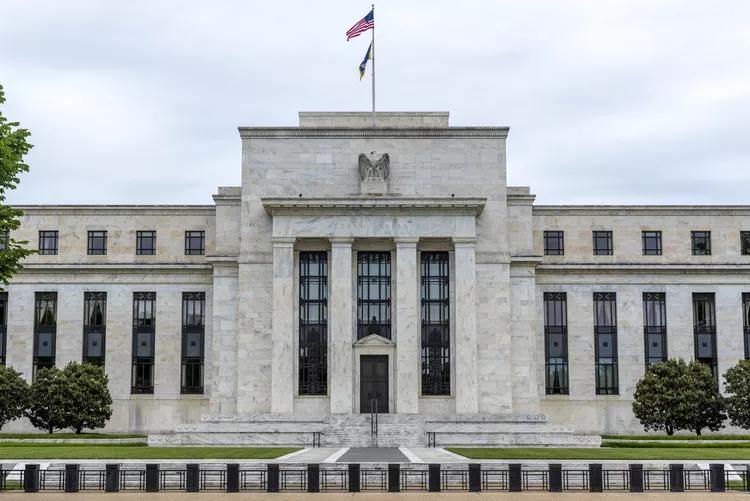
Bank Reporting to the Government
Whether you manage a household budget, a seven-figure portfolio, or a multigenerational estate, understanding bank reporting to the government is non-negotiable. This is where wealth strategy meets regulation—and where a savvy, tech-enabled approach can protect your capital and your time.
Bank reporting regulations: What gets shared, why it exists, and how it affects your money
Bank reporting regulations exist to balance two priorities: protect the financial system (AML/KYC) and collect taxes (IRS reporting). As a professional advisor, my job is to translate those rules into practical, ROI-positive decisions for clients—from students making their first paycheck deposit to retirees orchestrating tax-efficient withdrawals.
Here’s the big picture:
- Anti-Money Laundering (AML) rules and Know Your Customer (KYC) laws require banks to verify identities, monitor transactions, and report suspicious or large cash activity.
- The IRS receives income-related forms (e.g., 1099-INT for interest), but does not see your account daily unless it obtains legal authority (e.g., summons, court order).
- FinCEN (Financial Crimes Enforcement Network) sets many of the reporting requirements under the Bank Secrecy Act (BSA), including CTRs and SARs.
In practice:
- Honest, routine banking rarely triggers issues.
- The fastest way to invite scrutiny is to structure cash deposits to avoid thresholds or to mismatch your tax returns with obvious income signals.
- Good recordkeeping plus smart automation creates both compliance and speed.
Government access to bank accounts: Who can see what—and when
Government access to bank accounts is structured and rule-driven, not free-for-all.
- The IRS typically sees what financial institutions report to it (e.g., 1099-INT, 1099-DIV, 1099-B, 1099-K from some payment processors). It can seek more via summons if auditing or investigating.
- FinCEN receives CTRs and SARs from financial institutions under BSA/AML rules.
- Law enforcement can access more detailed information with appropriate legal processes (warrants, subpoenas, or court orders).
- State agencies may access certain records in specific legal contexts (e.g., child support enforcement).
Plain English takeaway: day-to-day banking isn’t “open book” to the government. Reporting is structured around legal triggers, tax forms, and suspicious activity protocols.
IRS bank reporting: What the IRS actually receives
Common IRS information returns tied to banking and investing:
- 1099-INT: Interest income from bank and credit union accounts
- 1099-DIV: Dividends, capital gains distributions from brokerage accounts
- 1099-B: Proceeds from broker transactions (and cost basis reporting)
- 1099-K: Payment processors/marketplaces for goods/services if applicable legal thresholds are met
- 1099-R: Distributions from retirement accounts and pensions
Key notes for 2025 and beyond:
- There is no blanket IRS policy that “checks your bank account” without legal process. The IRS matches reported forms to your tax return to identify discrepancies.
- A previously floated proposal to require bank inflow/outflow reporting above low thresholds (like $600) has not been enacted at the federal level.
Advisor move: Use portfolio and cash-flow aggregation tools to reconcile 1099s against your expected annual income flows to limit audit risk.
FinCEN reporting requirements: AML backbone of the banking system
FinCEN administers BSA rules, which include:
- Currency Transaction Report (CTR): Required when a customer conducts cash transactions over $10,000 in a single business day (aggregate applies).
- Suspicious Activity Report (SAR): Filed when a bank detects suspicious or potentially illegal behavior (e.g., structuring, identity fraud). Banks cannot disclose SARs to customers.
Also relevant:
- The “Travel Rule”: For wire transfers and certain transmittals of funds over $3,000, certain information must “travel” with the payment.
- Beneficial ownership data: Financial institutions collect data on legal entities’ beneficial owners during account opening under CDD (Customer Due Diligence) rules. Separately, many companies must file Beneficial Ownership Information (BOI) reports directly with FinCEN under the Corporate Transparency Act (not a bank report, but it affects business owners).
Know Your Customer (KYC) laws: Identity, verification, risk profiles
KYC is your bank’s way of “knowing who’s behind the money.” Expect:
- ID verification (driver’s license, passport, SSN/ITIN)
- Source of funds and expected account activity questionnaires
- Ongoing monitoring using risk-based models
For students and early-career professionals: this may feel intrusive, but it’s standard and not personal—just system hygiene.
Anti-Money Laundering (AML): Monitoring, machine learning, and market integrity
AML programs use a combination of rules, analytics, and increasingly AI to detect:
- Structuring (breaking up cash deposits to avoid the $10,000 CTR threshold)
- Rapid movement of funds inconsistent with stated profile
- Sanctions risks (OFAC screening)
- Transaction patterns linked to known fraud typologies
Advisor insight: The best financial institutions combine human investigators with machine learning to reduce false positives and keep honest customers friction-free. If you’re repeatedly flagged by mistake, a proactive conversation with your bank plus a predictable transaction pattern often resolves it.
Currency Transaction Report (CTR): The $10,000 cash rule
CTR basics:
- Trigger: Cash deposits or withdrawals over $10,000 in one business day (aggregated across accounts).
- Applies to: Cash only (currency). Not wires, checks, or ACH.
- Form filed by: The bank, not you.
Smart practice:
- If you’re a small business or real estate investor dealing with cash, keep a log and deposit in full. Don’t “dance around” $9,999—it looks like structuring and could trigger a SAR, which is far more serious.
Suspicious Activity Report (SAR): Behavior over amounts
Banks file a SAR when:
- Activity appears structured to evade rules
- Transactions don’t match known customer profile
- Fraud or identity theft is suspected
- Sanctions or illicit patterns are present
You won’t be notified. A SAR is confidential by law. As an advisor, I counsel clients to document the economic purpose behind larger or unusual transfers—especially cross-border—before they hit the banking system.
The privacy layer: What banks can share—and how you control some of it
Under the Gramm-Leach-Bliley Act (GLBA), banks can share information for:
- Everyday business (servicing accounts)
- Fraud prevention and compliance (mandatory)
- Certain affiliate uses and third-party marketing (you may be able to opt out)
You cannot opt out of regulatory reporting (CTR, SAR, tax forms). You can often opt out of some marketing-related sharing. Read your privacy notice annually.
Using tech to stay compliant and grow wealth: Practical playbooks for every stage
The regulatory environment doesn’t have to slow you down. The right tools make compliance a non-event and free you to focus on returns, taxes, and velocity of money.
For students and early-career professionals
Objective: Build a clean financial foundation that plays nicely with AML/KYC and compounding.
- Use a digital bank with robust security and clear privacy controls. Turn on alerts for large transactions.
- Automate savings to a high-yield account and Roth IRA (if eligible).
- Keep cash usage low; use traceable methods (debit, credit, ACH) for a transparent paper trail.
- Document side hustle revenue and expenses with a simple bookkeeping app. Expect 1099-K or 1099-NEC if applicable.
- If you get paid in cash, deposit the full amount, keep receipts, and record it. Don’t “game” deposit sizes.
ROI lens: Clean records drive faster loan approvals, lower audit risks, and better credit-based opportunities.
For mid-career professionals and business owners
Objective: Optimize taxes and liquidity while avoiding AML friction.
- Aggregate accounts with a secure personal finance dashboard that tags inflows/outflows and flags cash anomalies before the bank does.
- If your business handles cash, set a standard deposit day and deposit the full count—don’t split across branches or days to “avoid paperwork.”
- For cross-border wires, pre-document purpose, contracts, and counterparty details. Share with your bank’s private client or business banker ahead of time.
- Use spend management tools for employees; enforce merchant category controls and receipt capture to align with AML expectations.
- Coordinate with your CPA on expected 1099s and reconcile quarterly. Mismatches invite notices.
ROI lens: Fewer compliance delays, faster settlement cycles, and less administrative drag mean more time compounding capital.
For retirees and legacy planners
Objective: Preserve capital, streamline distributions, and reduce regulatory friction.
- Consolidate accounts where appropriate for simpler 1099 reporting and RMD coordination.
- For larger gifts or charitable distributions, pre-brief your advisor and bank; provide letters of intent and charity verification to reduce compliance checks.
- Use qualified charitable distributions (QCDs) from IRAs (if eligible) to satisfy RMDs tax-efficiently and minimize taxable income that might otherwise generate mismatches.
- Keep POA, trust documents, and beneficiary designations updated and readily shareable with custodians for KYC/AML clarity.
ROI lens: Cleaner estate planning and faster funds movement reduce stress and preserve optionality for beneficiaries.
Advisor workflow: How modern finance professionals streamline compliance
Here’s how we use technology across client types:
- Data ingestion and normalization
- Connect institutions via secure APIs (Open Finance).
- Normalize transactions and map to IRS categories.
- Automated anomaly detection
- Machine learning flags atypical cash activity, unusual counterparties, or velocity spikes before they hit bank AML tripwires.
- Tax-aware portfolio management
- Real-time 1099 projections and withholding checks.
- Harvest losses systematically without triggering wash sales.
- Documentation by design
- Embed purpose-of-funds notes inside the financial plan for large transfers or cross-border wires.
- Secure document vaults store invoices, contracts, and gifting letters.
- Ongoing education
- Quarterly client briefings on changes in FinCEN, IRS, and KYC expectations.
- Proactive coaching for business owners who handle cash.
Result: Fewer frozen wires, faster compliance clears, lower audit risk, and more consistent after-tax returns.
Playbook: Preventing compliance friction before it starts
Use this checklist to stay ahead:
- Predictable patterns: Align your inflows/outflows with your disclosed banking profile. Update your bank when your activity changes.
- Avoid structuring: Never split cash deposits to dodge $10,000. Deposit what you have, document it, and move on.
- Keep evidence: Contracts, invoices, purchase agreements, donor letters—save them.
- Cross-border transparency: Document source, recipient, and purpose. Confirm sanctions risk is zero.
- Annual tax alignment: Reconcile 1099s and W-2s/NECs to your return. Fix mismatches early.
Visual quick guide: Who sees what and when
| Scenario | What gets reported | Who receives it | Your control |
|---|---|---|---|
| Earn interest in savings | 1099-INT | IRS | None (compliance reporting) |
| Deposit $12,000 cash | CTR | FinCEN | None (bank files automatically) |
| Pattern of $9,900 cash deposits | SAR (possible) | FinCEN | Don’t structure; deposit fully |
| Brokerage trades | 1099-B (+ cost basis) | IRS | None (report accurately) |
| Suspicious wire to high-risk jurisdiction | SAR (likely) | FinCEN | Provide documentation upfront |
| Marketing data sharing | Privacy notice options | Affiliates/partners | Often can opt out |
Student Personal Finance, Portfolio Management, and Data-Driven Insights
- Student: Use a single primary bank, automate investing, and link budgeting apps. This creates consistent, predictable patterns that reduce AML friction.
- Portfolio manager (DIY or advised): Sync brokerage and bank data to forecast taxes quarterly. Align tax lots to your long-term asset location plan (e.g., munis in taxable, REITs/ordinary income in tax-deferred).
- Financial data analysis: Use category rules, trend detection, and alerts to catch oddities—like repeated near-threshold cash deposits or unexplained inbound wires—before they escalate.
- Automated risk assessment: Configure risk models that incorporate liquidity needs, tax horizon, and regulatory friction probability (e.g., likelihood of funds being held pending verification).
- Investment forecasting: Integrate forward-looking cash needs into rebalancing rules so you don’t trigger forced sales during verification holds or settlement delays.
Do digital banks and fintech apps follow the same rules?
In substance, yes:
- Banks and many fintech partners are subject to BSA/AML rules, KYC, sanctions screening, and tax reporting where applicable.
- If your “app” provides money movement or holds funds through a partner bank or as a money services business (MSB), similar AML/KYC rules apply.
- Expect the same CTR and SAR logic regardless of whether your account is “digital” or at a traditional branch.
Pro tip: Review the app’s disclosures to identify the underlying bank and MSB registrations. Strong partners tend to mean smoother compliance and fewer transaction holds.
FAQ Section
Q: Do banks report deposits under $10,000 to the government?
A: Routine deposits under $10,000 do not trigger a Currency Transaction Report (CTR). However, if a bank suspects “structuring” (breaking up deposits to stay under $10,000), it may file a Suspicious Activity Report (SAR). SARs are confidential and filed with FinCEN. Bottom line: deposit what you actually have and keep records.
Q: Can I stop my bank from sharing information with the government?
A: You cannot opt out of legal reporting like CTRs, SARs, and IRS information returns (e.g., 1099s). You may be able to limit certain marketing-related data sharing under privacy rules, but not compliance reporting. Read your bank’s annual privacy notice for opt-out options that do exist.
Q: Who can see my banking information?
A: The IRS sees tax-related information returns your bank/broker files (e.g., 1099s). FinCEN receives CTRs and SARs from financial institutions. Law enforcement can access additional details with legal authority (e.g., subpoena, warrant). Day-to-day balances are not broadly accessible without proper legal process.
Q: What happens if I deposit $9,999 in cash?
A: A single deposit of $9,999 does not by itself trigger a CTR, but repeated near-threshold deposits may be viewed as structuring and could trigger a SAR. It’s far safer—and fully legal—to deposit the full amount of cash you have, even if it’s over $10,000, and maintain documentation.
Q: Do digital banks and fintech apps follow the same rules?
A: Yes. Whether you bank with a traditional institution or a digital platform, BSA/AML, KYC, and sanctions screening apply. CTR and SAR rules are consistent. Many apps partner with regulated banks that handle the underlying compliance.
Conclusion
Regulatory clarity is not a barrier to wealth—it’s an accelerant when you pair it with technology and discipline. Align your cash flow patterns with AML/KYC expectations, automate your documentation, and reconcile your tax forms proactively. That’s how students build clean histories, professionals optimize liquidity and taxes, and retirees move capital confidently without friction.
If you want a tech-forward plan that integrates banking rules, tax strategy, and portfolio optimization, I can help you implement a compliance-by-design workflow that protects your time and amplifies your after-tax returns. Adopt the right tools, stay transparent, and keep your capital compounding.
References
- The information banks and credit unions share about you — The College Investor: https://thecollegeinvestor.com/42330/information-banks-credit-unions-share-about-you/
- Transferring Colleges: A Finance-First, Data-Driven Playbook for Maximizing ROI
- Maximize Your Returns: Tax Deductions for Tuition and Student Loans
- Gerber Life Insurance Policy for College: Smart Uses, Risks, and ROI
- Apple iPhone 17 announcement: should I upgrade to iPhone 17?
- Bilt Rewards Etihad Guest transfer: A Pro’s Guide to Maximizing Point-to-Mile ROI
- Finding a House in the Current Market: A Data-Driven Guide for Smart Buyers